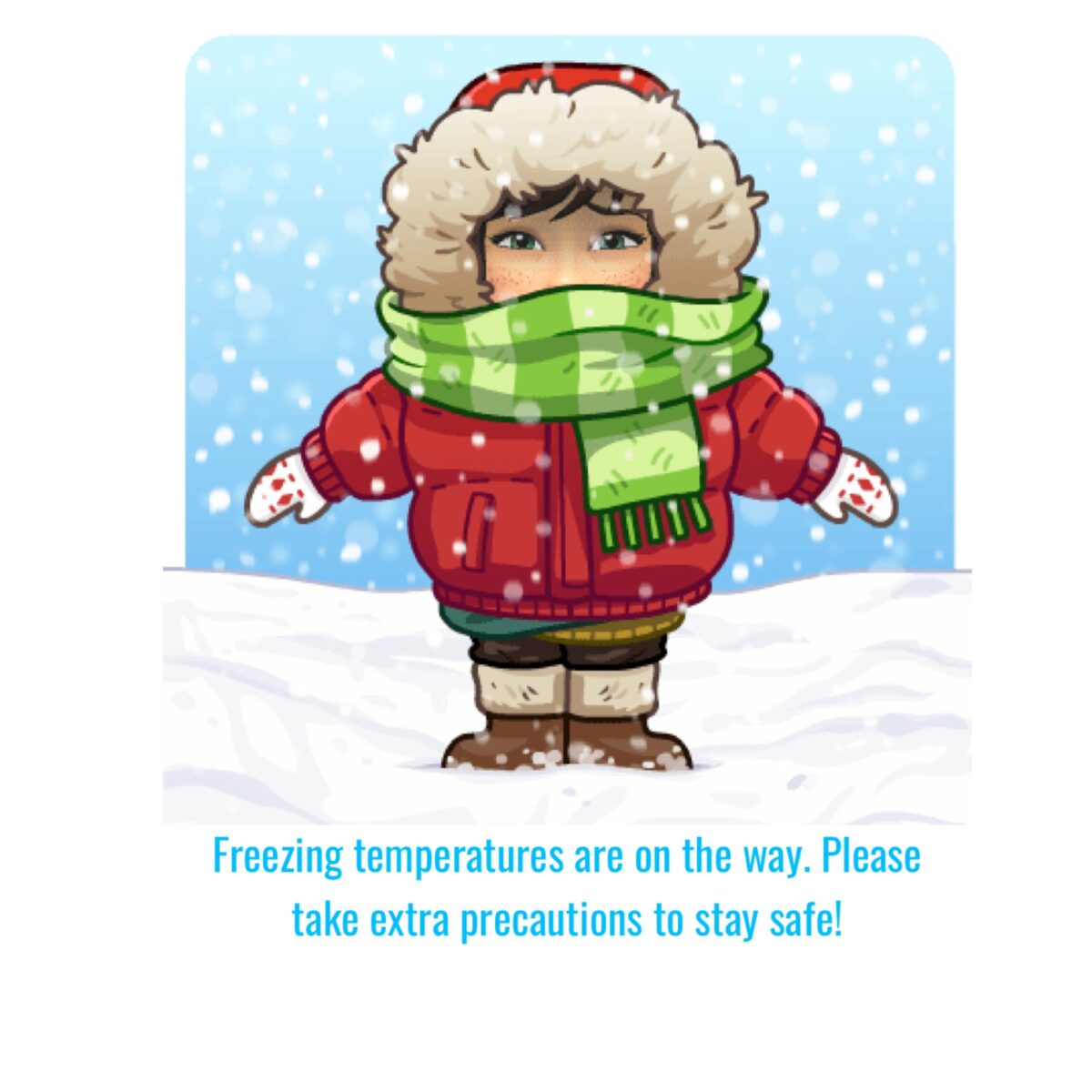
With freezing temperatures moving into our area, we want to remind our patients to take extra precautions to stay safe and healthy during this cold snap. Frostbite & Cold Exposure • Limit time outdoors when temperatures drop below freezing. • Dress in layers and cover exposed skin, especially hands, feet, ears, and your face. • Watch for signs of frostbite such as numbness, tingling, pale or hard skin, and seek medical care if symptoms occur. • Avoid tight footwear or gloves that may reduce circulation. Prevent Slips & Falls • Use caution on icy sidewalks, driveways, and parking lots. • Wear shoes with good traction and take slow, careful steps. • Keep walkways clear of ice and snow when possible. Stay Warm & Safe Indoors • Keep your home adequately heated. • Use space heaters safely, keep them away from flammable items and never leave them unattended. • Check on elderly family […]

In extremely cold temperatures, it’s crucial to take steps to protect yourself from frostbite and hypothermia. Frostbite can occur in minutes when skin is exposed to freezing temperatures, especially on extremities like fingers, toes, ears, and the nose. To stay safe, wear several layers of loose, warm clothing, and ensure that your hands, feet, and head are well-covered with insulated gloves, thick socks, and a hat. Avoid staying outside for long periods, and watch for signs of frostbite, such as numbness, tingling, or pale, hard skin. If you suspect frostbite, seek warmth immediately and avoid rubbing the affected area, as this can cause further damage. We encourage staying indoors during extreme cold, staying hydrated, and checking on others, especially the elderly or those with health conditions, are also vital to prevent cold-related injuries. When to see a doctor: Other than frostnip, frostbite injuries need to be checked by a healthcare professional to […]