by Family Physicians
Share
by Family Physicians
Share
In extremely cold temperatures, it’s crucial to take steps to protect yourself from frostbite and hypothermia. Frostbite can occur in minutes when skin is exposed to freezing temperatures, especially on extremities like fingers, toes, ears, and the nose.
To stay safe, wear several layers of loose, warm clothing, and ensure that your hands, feet, and head are well-covered with insulated gloves, thick socks, and a hat. Avoid staying outside for long periods, and watch for signs of frostbite, such as numbness, tingling, or pale, hard skin. If you suspect frostbite, seek warmth immediately and avoid rubbing the affected area, as this can cause further damage.
We encourage staying indoors during extreme cold, staying hydrated, and checking on others, especially the elderly or those with health conditions, are also vital to prevent cold-related injuries.
When to see a doctor:
Other than frostnip, frostbite injuries need to be checked by a healthcare professional to find out how serious they are.
Seek emergency care for:
- Intense pain even after taking a pain reliever and rewarming.
- Intense shivering.
- Slurred speech.
- Drowsiness.
- Trouble walking.
People with frostbite also might have hypothermia. Shivering, slurred speech, and being sleepy or clumsy are symptoms of hypothermia. In babies, symptoms are cold skin, a change in skin color and very low energy. Hypothermia is a serious condition in which the body loses heat faster than it can be produced.

Today, we’re celebrating Jennifer and the wonderful heart she brings to Family Physicians! Jennifer has been part of our team since February 21, 2011, and her passion for caring for others began long before that. She started her nursing career in the ICU at the University of Iowa, where she recognized just how many health conditions could be better managed, and sometimes even prevented, through great primary care. That realization sparked her passion for family medicine. Fast forward 16 years, and Jennifer says one of the most rewarding parts of her career has been the opportunity to care for so many wonderful people and families. Through life’s challenges and blessings, she hopes to offer support, guidance, and treatment that help make a meaningful difference in their lives. She is truly thankful for the opportunity to be part of her patients’ lives, and we are just as thankful to have her as part […]
November is Pancreatic Cancer Awareness Month, and this is an opportunity to learn, recognize warning signs, and help bring attention to a cancer that desperately needs more awareness and research. DID YOU KNOW? 💜 Pancreatic cancer is among the leading causes of cancer-related deaths in the United States. 💜 An estimated 67,530 Americans will be diagnosed with pancreatic cancer in 2026. 💜 It is often difficult to detect early because symptoms may not appear until the disease has progressed. 💜 There is currently no recommended routine screening test for people at average risk. KNOW THE POSSIBLE WARNING SIGNS: • Persistent abdominal or back pain • Unexplained weight loss • Loss of appetite • Yellowing of the skin or eyes (jaundice) • Dark urine or light-colored stools • Digestive changes, nausea, or vomiting • New-onset diabetes or unexplained changes in blood sugar • Unusual fatigue WHO MAY BE AT HIGHER RISK? • Smoking […]
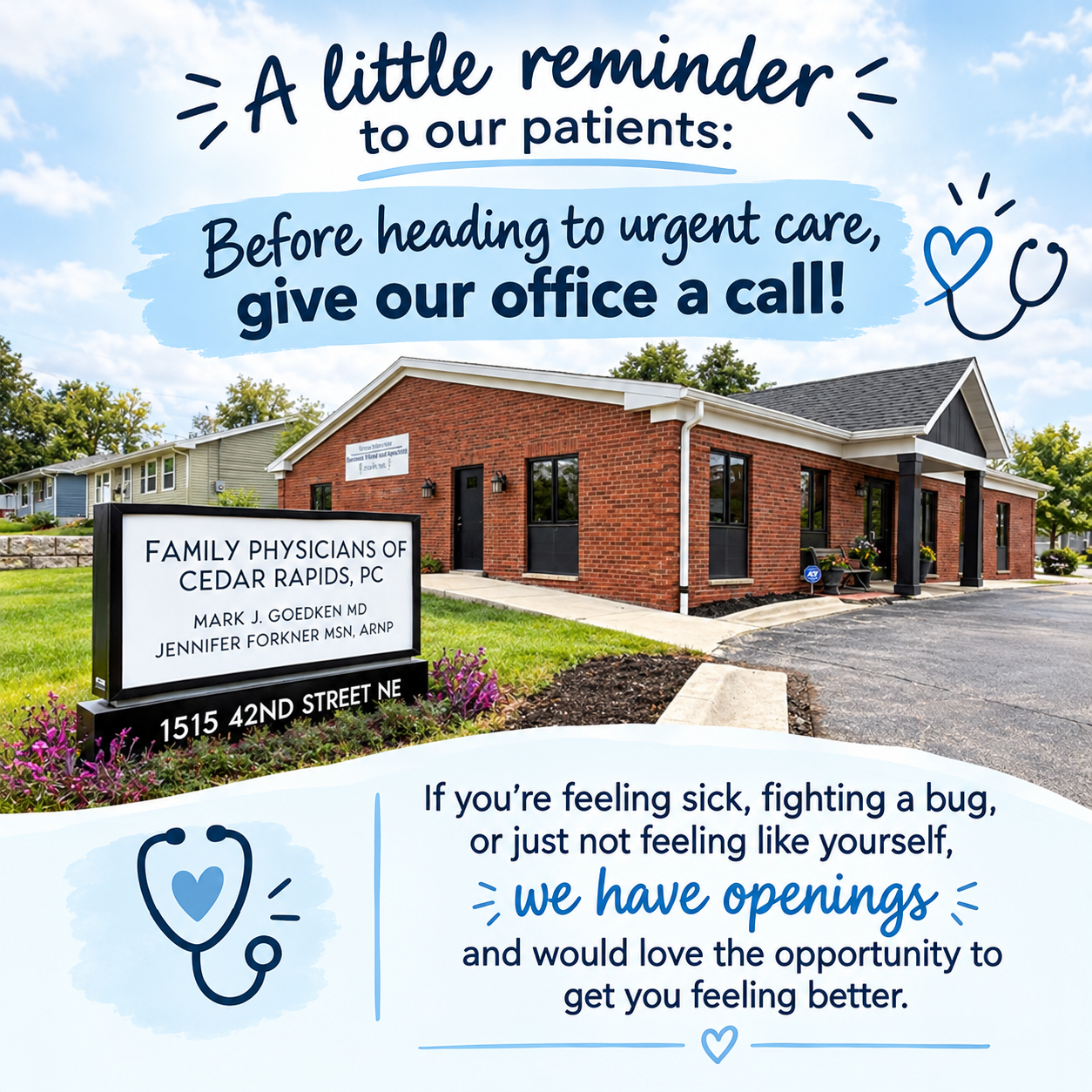
Your family doctor is often the best place to start, and our team is just a phone call away! We’re here for you, because your health matters to us! Just a little reminder: if symptoms are severe or potentially life-threatening, emergency care is the right choice.
Sometimes the most important thing we can do for our health is simply pay attention. Lung cancer affects thousands of families every year. While smoking is the leading risk factor, you do not have to be a smoker to develop lung cancer. DID YOU KNOW? Lung cancer is the leading cause of cancer-related deaths in the United States. Exposure to secondhand smoke, radon, certain workplace chemicals, and family history can also increase risk. Lung cancer may not cause noticeable symptoms in its early stages. Early detection can make a meaningful difference. KNOW THE POSSIBLE WARNING SIGNS: A cough that doesn’t go away or gets worse. Shortness of breath or wheezing. Chest pain or discomfort. Coughing up blood. Unexplained weight loss. Ongoing fatigue. Repeated bouts of bronchitis or pneumonia. DON’T IGNORE THE SIGNS. Annual low-dose CT lung cancer screening may be recommended for adults ages 50–80 who have a 20 pack-year smoking history […]