
by Family Physicians
Share
by Family Physicians
Share

Each year, March marks National Colorectal Cancer Awareness Month, shining a much needed spotlight on a disease that impacts 1 in 23 men and 1 in 25 women during their lifetime.
Why is this month important?
Colorectal cancer is the second leading cause of cancer deaths in the United States, but the good news is that it is highly preventable with regular screenings. When detected early, colorectal cancer is often treatable and sometimes even avoidable.
Who should get screened?
• Adults 45 and older, even if you have no symptoms.
• Anyone with a family history of colorectal cancer.
• People experiencing symptoms like persistent changes in bowel habits, rectal bleeding, or unexplained weight loss.
What are your screening options?
There are multiple ways to screen for colorectal cancer, including:
• Colonoscopy (the gold standard for detection and prevention)
• Stool-based tests (non-invasive options you can do at home)
Prevention starts with awareness.
This month, we encourage everyone to talk to their healthcare provider about their screening options and take that important step toward protecting their health. Early detection saves lives, let’s work together to raise awareness and reduce the risk of colorectal cancer in our community.
Have questions? Ready to schedule your screening? Contact our office today your health is worth it.
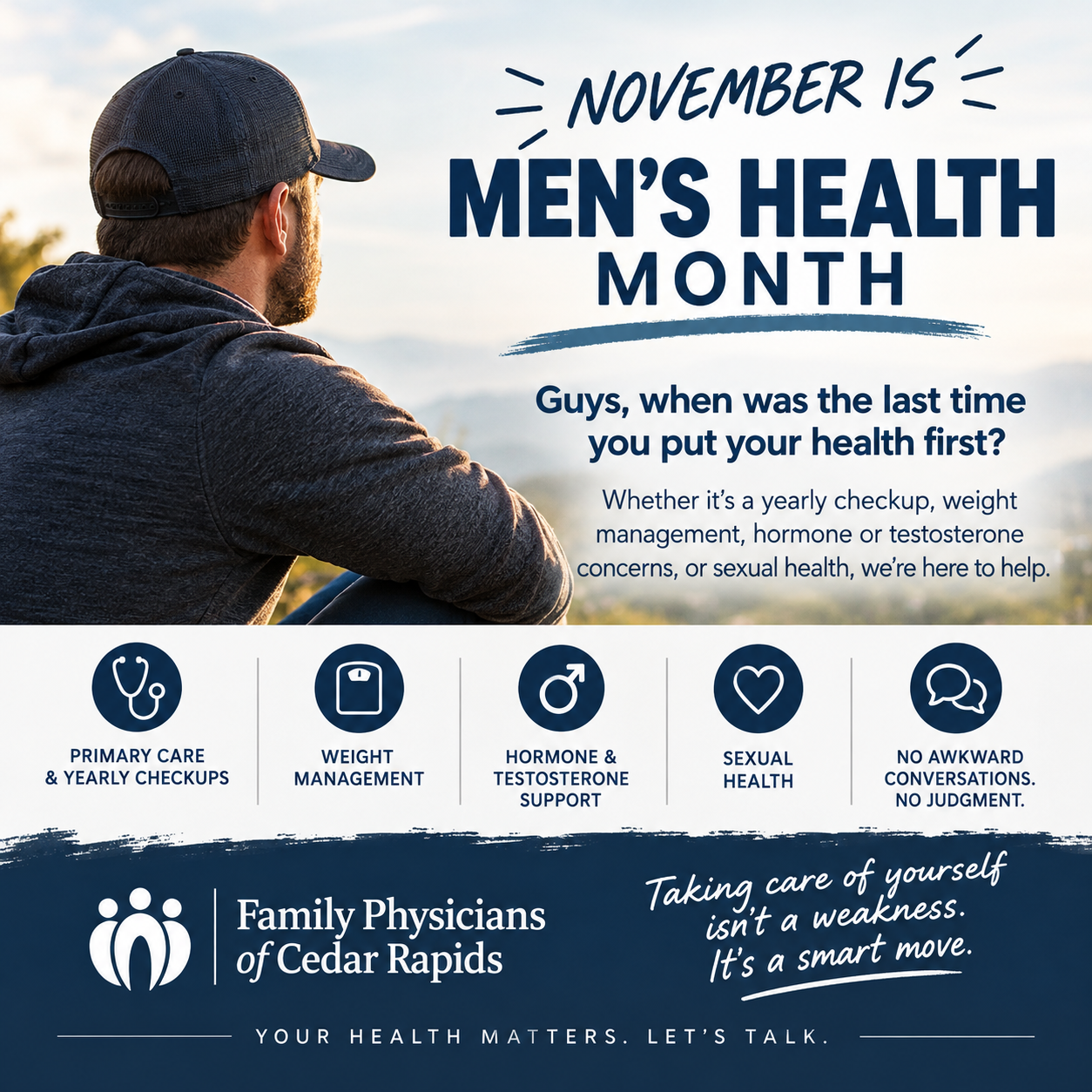
No awkward conversations. No judgment. Just honest answers, good care, and a plan that works for you. Taking care of yourself isn’t a weakness. It’s a smart move. Your health matters. Let’s talk. — Family Physicians of Cedar Rapids

Today, we pause to recognize and thank the brave men and women who have served our country. Your courage, sacrifice, and dedication have given us so much to be grateful for. To our veterans, our patients, our family members, and all who have worn the uniform, please know that your service is appreciated more than words can express.
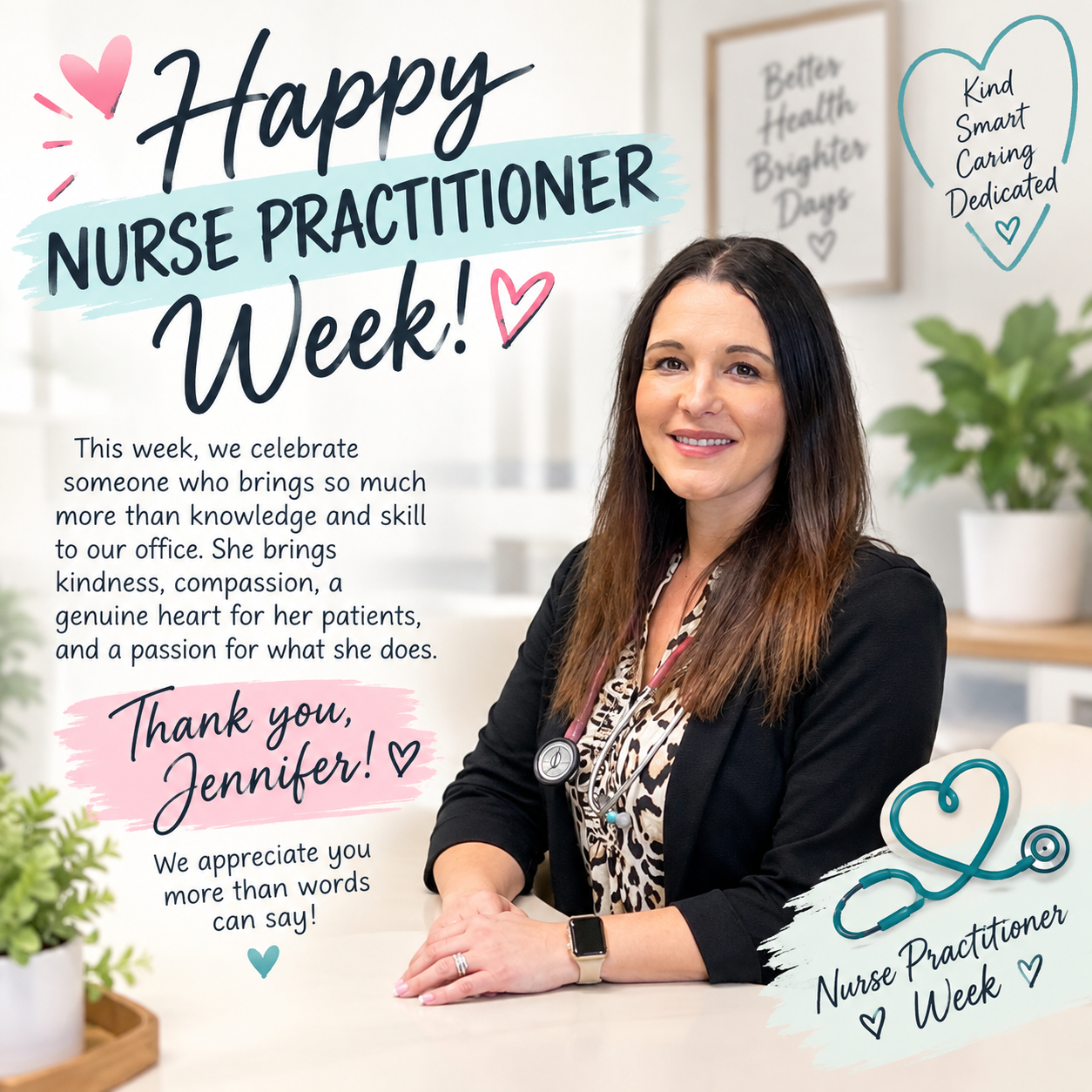
We are so lucky to have her as part of our team, and our patients are lucky to have her in their corner.
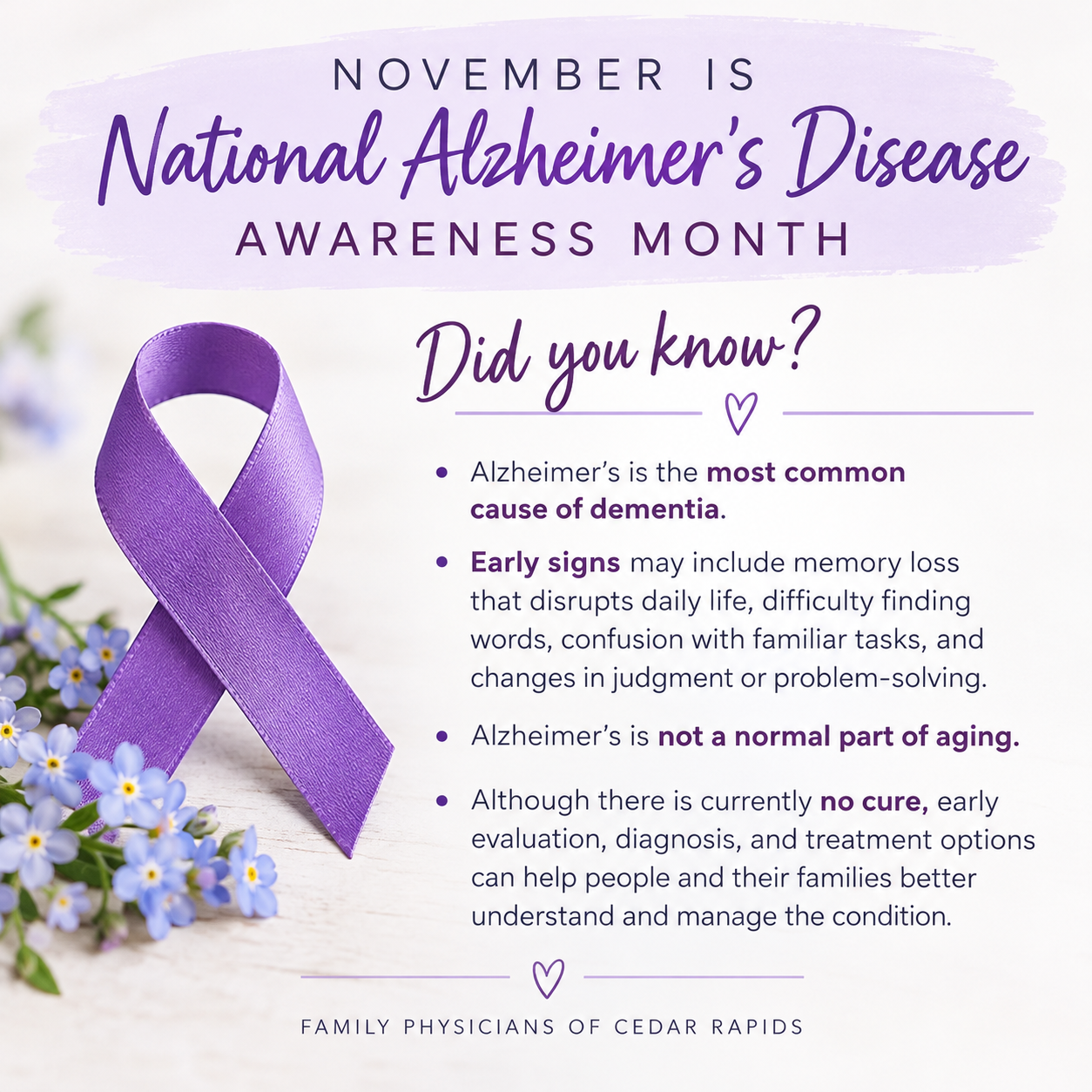
Alzheimer’s disease is more than simply forgetting things. It is a progressive brain disease that affects memory, thinking, behavior, and eventually the ability to carry out everyday activities. Don’t ignore the signs. Start the conversation. Let’s raise awareness, encourage early conversations, and remember that every memory matters.