by Family Physicians
Share
by Family Physicians
Share
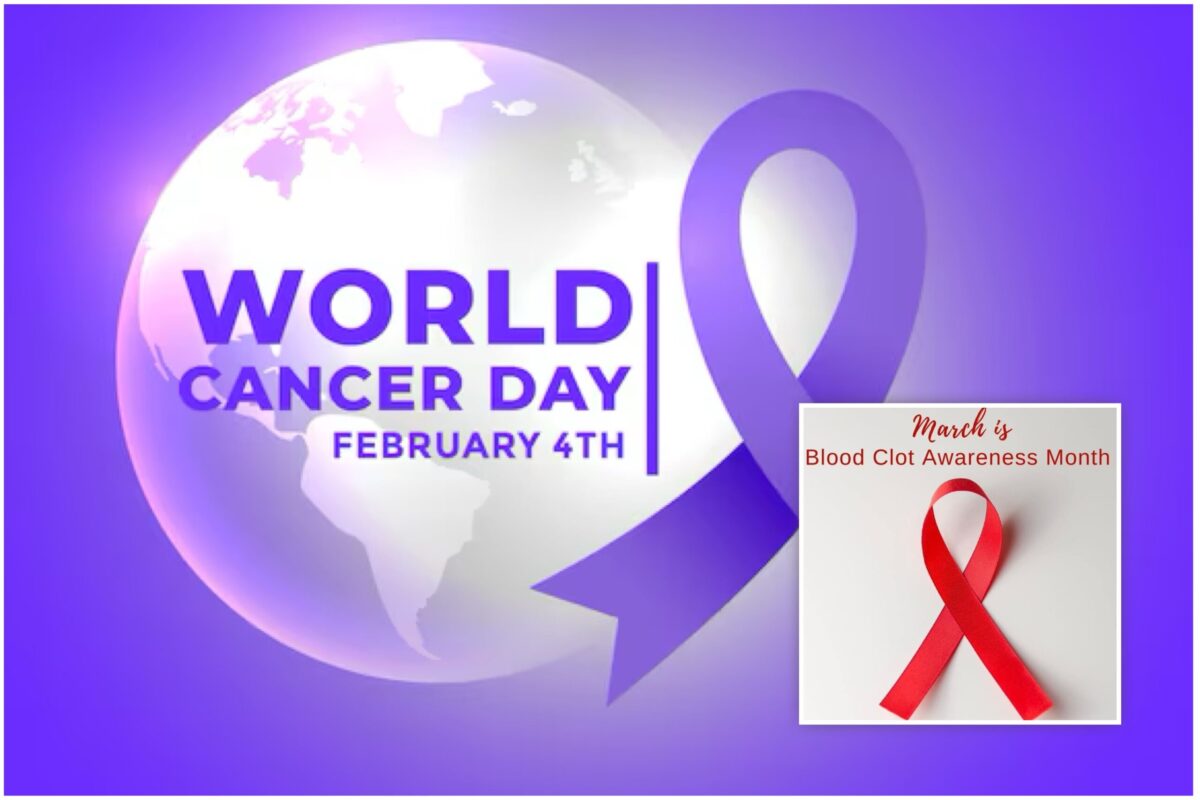
Yesterday was World Cancer Day, we were deeply moved by a heartfelt compliment from a patient who shared their gratitude for the care and compassion they’ve received at our office. They spoke about how our doctors not only provide exceptional medical expertise but also take the time to listen, comfort, and support them through every step of their journey. Moments like these remind us why we do what we do. Our mission is not just to treat but to uplift, reassure, and stand by our patients in their most vulnerable moments. We are honored to be part of their fight and will continue to provide the highest level of care to every patient who walks through our doors.
We thought we would share some information on Blood Clots, as this is what our patient is dealing with on top of fighting cancer.
Blood Clots in the Legs and Lungs
Blood clots can develop in the deep veins of the legs, known as deep vein thrombosis (DVT), and can become life-threatening if they travel to the lungs, causing a pulmonary embolism (PE). Recognizing the symptoms and risk factors is crucial for early detection and treatment.
Deep Vein Thrombosis (DVT)
DVT occurs when a blood clot forms in a deep vein, typically in the legs. Common symptoms include swelling in one leg, pain or tenderness (often in the calf), warmth in the affected area, and skin discoloration. If untreated, a clot can break loose and travel to the lungs, leading to a pulmonary embolism.
Pulmonary Embolism (PE)
A pulmonary embolism happens when a blood clot blocks blood flow in the lungs. Symptoms include sudden shortness of breath, sharp chest pain (especially when breathing deeply), rapid heart rate, coughing up blood, and feeling dizzy or faint. PE is a medical emergency that requires immediate attention.
Risk Factors
Several factors increase the risk of DVT and PE, including prolonged immobility (such as during long flights or bed rest), recent surgery or injury, medical conditions like cancer or clotting disorders, pregnancy, birth control pills or hormone therapy, smoking, obesity, and a family history of blood clots.
Prevention and When to Seek Help
To lower the risk, individuals should stay active, hydrate well, wear compression stockings if recommended, and avoid smoking. Those at high risk may need blood thinners. If symptoms of DVT or PE occur, seeking immediate medical attention is essential, as a pulmonary embolism can be life-threatening.

We believe healthcare should be about more than simply adding years to life. It should be about helping you stay active, independent, healthy, and enjoying the life you love. Over 50 years of family medicine. A new focus on quality of life. A healthier future together.

We’re doing a little office clean-out and have some Styrofoam coolers available for anyone who could use them! And BONUS, we also have Miracle-Gro Pour & Feed ice packs that can be used to help feed your plants. Everything is FREE! Stop by the office and pick some up. You take it… we get a little more space. It’s a win-win!

There’s a lot happening behind the scenes at Family Physicians of Cedar Rapids… •A fresh new look •New faces on our team •New services & wellness options •And the same commitment to caring for our patients We’re growing, improving and making our office an even better place to care for you. Same roots. New growth.

Our new front desk is coming along nicely, and we’re getting closer to the finish line! 🛠️✨ A little dust, a little noise, and A LOT of excitement… because we can’t wait for you to see it! Thanks for hanging in there with us while we make our office even better!