
by Family Physicians
Share
by Family Physicians
Share

As we welcome a new month, we also bring attention to Crohn’s & Colitis Awareness Week (December 1–7) a time dedicated to shining a light on the millions of people living with inflammatory bowel diseases (IBD).
What Are Crohn’s & Colitis?
• Crohn’s Disease and Ulcerative Colitis are chronic inflammatory conditions that affect the gastrointestinal tract.
• They can cause symptoms such as abdominal pain, fatigue, unintended weight loss, diarrhea, and inflammation that can impact daily life.
• These conditions often come in cycles, periods of flare-ups and periods of remission.
Why This Week Matters
Crohn’s & Colitis Awareness Week helps:
• Educate communities about the challenges individuals face.
• Encourage earlier diagnosis, which can greatly improve long-term health.
• Support research, which has led to new treatments, better symptom management, and improved quality of life for patients.
• Show solidarity with patients who often manage invisible symptoms every single day.
To all who live with Crohn’s, Colitis, or other chronic conditions, you show incredible strength navigating unpredictable days, strict treatment plans, and the emotional toll that can come with chronic illness.
As December begins, let’s spread awareness, compassion, and hope, one story, one patient, one step forward at a time.
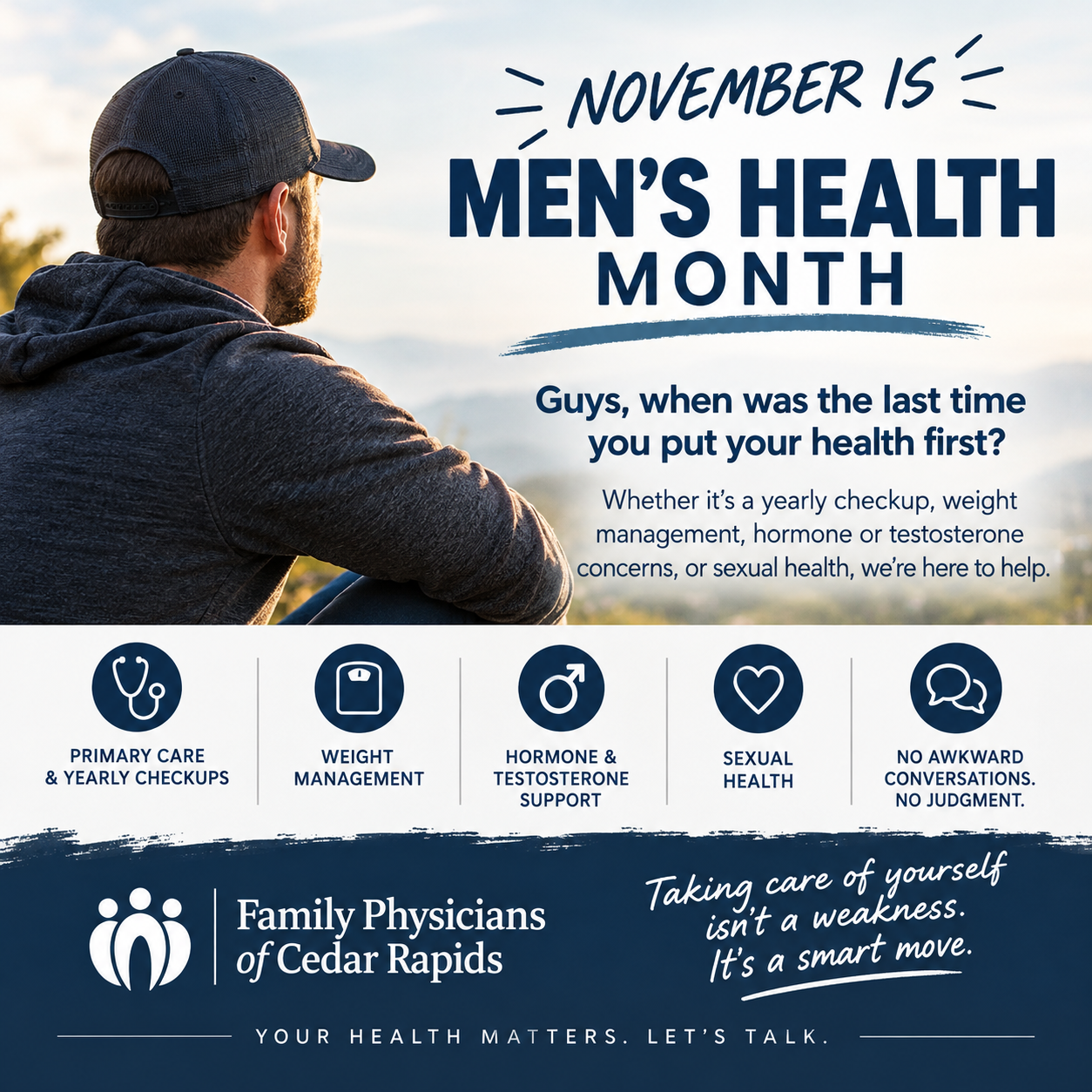
No awkward conversations. No judgment. Just honest answers, good care, and a plan that works for you. Taking care of yourself isn’t a weakness. It’s a smart move. Your health matters. Let’s talk. — Family Physicians of Cedar Rapids

Today, we pause to recognize and thank the brave men and women who have served our country. Your courage, sacrifice, and dedication have given us so much to be grateful for. To our veterans, our patients, our family members, and all who have worn the uniform, please know that your service is appreciated more than words can express.

We are so lucky to have her as part of our team, and our patients are lucky to have her in their corner.
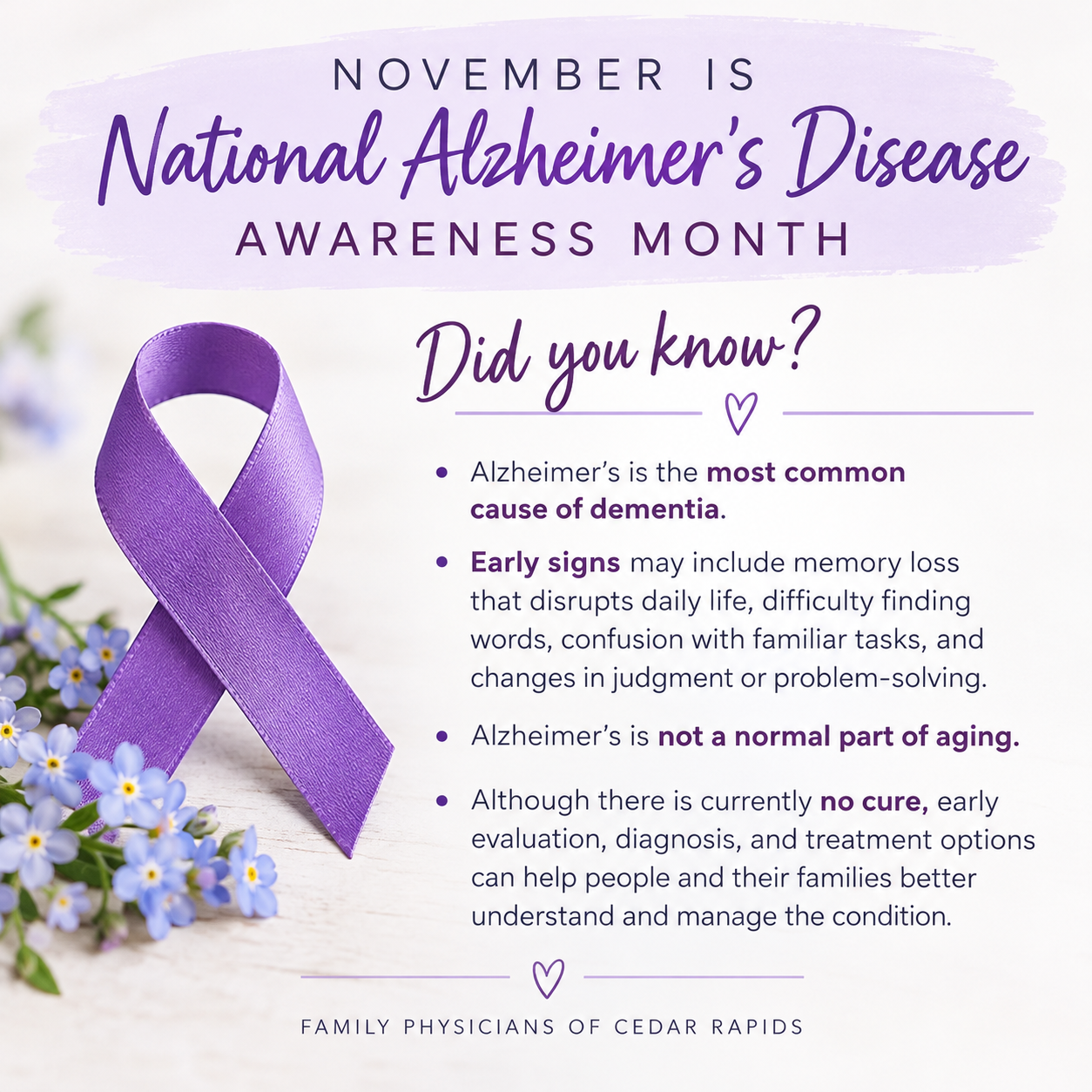
Alzheimer’s disease is more than simply forgetting things. It is a progressive brain disease that affects memory, thinking, behavior, and eventually the ability to carry out everyday activities. Don’t ignore the signs. Start the conversation. Let’s raise awareness, encourage early conversations, and remember that every memory matters.